Why Walking After Eating Appears in So Many Studies
A short walk after a meal is one of the few behaviours that turns up again and again in metabolic research, exercise physiology and even sleep studies. It is not a trend borrowed from wellness culture; it is a low-intensity movement pattern that intersects with glucose handling, digestion, circulation and stress load. This page examines why the post-meal walk keeps appearing in the literature, what mechanisms researchers propose, and where the evidence remains thin. It is written for readers who want to understand the reasoning rather than follow a rule.
1. It Targets the Post-Meal Glucose Curve Directly
After a mixed meal, blood glucose rises as carbohydrate is absorbed. In many people this produces a peak somewhere between thirty and ninety minutes later, followed by a decline. Skeletal muscle is one of the main sinks for that glucose, and muscle contraction increases glucose uptake through pathways that do not depend entirely on insulin. A gentle walk keeps those contractions going at a low intensity for a sustained period, which is precisely the window when circulating glucose is highest.
Why it matters: the post-meal period is one of the few windows where a simple change in body position and movement shows up on a…
This is why the post-meal walk appears in studies that use continuous monitoring rather than single fasting samples. A fasting glucose reading taken in the morning says nothing about what happens after lunch. Researchers comparing sitting, standing and slow walking after identical meals tend to report differences in the size and duration of the post-meal rise. The effect is modest, and it varies with meal composition, fitness and insulin sensitivity.
Why it matters: the post-meal period is one of the few windows where a simple change in body position and movement shows up on a measurable curve, which is exactly the kind of signal that generates repeated study designs.
2. Muscle Contraction Changes How Glucose Enters Cells
Muscle tissue can take up glucose through insulin signalling, but contraction also translocates glucose transporters to the cell surface independently of insulin. This is a well-described mechanism in exercise physiology. Walking is low enough in intensity that it does not deplete glycogen rapidly, so the contraction-mediated route stays active without the fatigue that accompanies harder exercise.
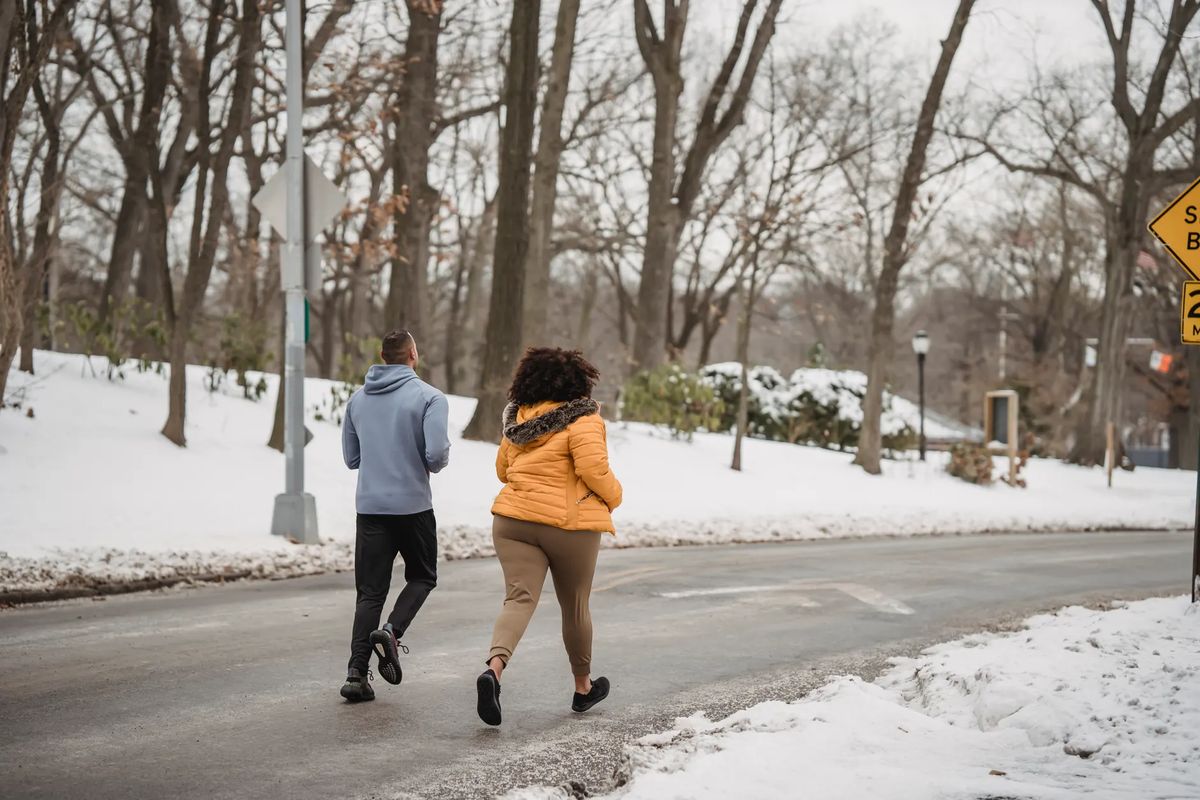
The practical consequence is that the walk does not need to be fast or long to be studied. Protocols frequently use a pace of roughly two to three miles per hour for ten to twenty minutes. What matters for the mechanism is that the muscle is contracting at all, repeatedly, during the absorption window. This is also why the effect is more reliable in people with larger muscle mass, since total glucose disposal capacity scales with it.
3. It Sits at the Intersection of Several Systems
Many interventions only touch one system, which makes them easy to isolate but limited in scope. A post-meal walk touches digestion, circulation, glucose handling and the nervous system at once. That breadth is part of why it appears in so many different literatures, from diabetes research to sleep science.
- Gastric emptying slows slightly when movement is gentle rather than vigorous.
- Peripheral circulation increases as muscles demand more blood flow.
- Resting heart rate often settles lower in the hours after light activity.
- Psychological stress load tends to ease during rhythmic, low-effort movement.
- Sleep quality is sometimes reported as better on days with evening movement.
These are not competing explanations; they overlap. A single walk can plausibly influence more than one outcome, which makes it attractive to researchers studying complex conditions where no single mechanism explains the whole picture. The downside is that overlapping effects are harder to attribute to one cause, so study designs have to be careful about what they claim.
4. The Evidence Is Consistent but Not Uniform
Across the literature, the direction of the post-meal glucose effect is fairly consistent, but the size of the effect is not. Differences appear by age, baseline fitness, body composition and the composition of the meal itself. A high-carbohydrate meal produces a larger curve to flatten; a meal heavy in fat and protein produces a smaller one.
What the literature reports is a shift in the shape of the post-meal curve, not a reversal of the underlying physiology.
This distinction matters for how the findings are read. A study showing a smaller post-meal peak is not the same as a study showing improved long-term outcomes. Many of the short-term trials last days or weeks, and adherence rate is often the limiting factor. Longer trials tend to rely on self-reported walking, which introduces its own error. So the honest summary is that the mechanism is plausible and the short-term signal is real, while the long-term picture depends on whether the behaviour is sustained.
5. Why It Shows Up in Sleep and Recovery Research
Sleep researchers became interested in post-meal walking for a different reason: it is a low-stress way to move in the evening without raising arousal. Vigorous exercise close to bedtime can delay sleep onset in some people, whereas a slow walk does not appear to do the same. Studies that track both activity and sleep sometimes note a relationship between evening light activity and reported sleep quality.
Where the evidence is weaker
The link between post-meal walking and sleep is less developed than the glucose link. Most of the data is observational, and self-reported sleep quality is a soft measure. A sleep diary template and a sleep tracker can both introduce bias because people who walk in the evening may already have different routines and expectations. Researchers generally treat this area as promising but not settled.
- Glucose-related findings rest on measurable biochemical endpoints, which strengthens them.
- Sleep-related findings often rest on subjective reports, which weakens them.
- Recovery claims tend to generalise from measures like resting heart rate without controlling for everything else.
6. How Researchers Actually Measure the Effect
To study a post-meal walk properly, a trial usually needs a controlled meal, a defined walking pace, and a way to sample glucose repeatedly. That often means a continuous monitor, a food diary, or timed finger-prick samples with a home glucose meter. A step counter confirms that the walking occurred; without it, participants often overestimate how much they moved.
The variables that get measured alongside glucose tell their own story. A blood pressure cuff records the circulatory response. A smart scale tracks weight and body composition over weeks. A lab panel adds vitamin D level, fasting glucose and other markers that may interact with the behaviour. Researchers also watch adherence rate, because a protocol that only half the participants complete cannot support a strong conclusion.
7. Why the Behaviour Persists Across Different Populations
Post-meal walking has been studied in older adults, in people with type 2 diabetes, in sedentary office workers and in healthy young volunteers. It appears in all of them because the underlying mechanism does not require a specific clinical state. Muscle contraction disposes of glucose in everyone; the size of the effect simply varies with how much muscle is doing the work.
This broad applicability is exactly why the topic recurs. A behaviour that works in one narrow group is a specialised finding; a behaviour that shows a directionally consistent effect across groups becomes a recurring theme. It is also cheap and low-risk, which makes it attractive to study in populations where more demanding interventions are inappropriate or difficult to sustain.
8. What the Pattern Does Not Tell You
A recurring theme in the literature is not the same as a proven treatment. Many of the studies are short, many rely on surrogate endpoints, and some are observational. The walk itself is not a substitute for medical care, and it does not address underlying conditions that require clinical assessment. What it does is provide a plausible, low-cost behaviour that researchers can measure.
Readers trying to make sense of their own numbers often face a version of the same problem the researchers do: plenty of data, limited interpretation. A lab results glossary can help translate what a given marker means and where the evidence is strong or weak. A myth-versus-evidence table does something similar for common claims, separating what has been studied from what has merely been asserted.
There is also a limitation that the popular summaries usually skip. Most post-meal walking trials do not last long enough to say anything about long-term outcomes such as cardiovascular events or mortality. The endpoint is usually the shape of a glucose curve or a short-term marker. That is a real finding, but it is a narrow one. Researchers are careful to describe it as such, and readers should be too.
Key Takeaways
- Post-meal walking appears in many studies because it acts on glucose handling through muscle contraction independent of insulin.
- The direction of the short-term glucose effect is fairly consistent; the size of the effect varies widely.
- Sleep and recovery claims rest on weaker, often observational evidence than the glucose claims.
- Measurement tools like a step counter, food diary and home glucose meter shape how much a study can conclude.
- A recurring research theme is not the same as a proven long-term outcome; most trials are short and use surrogate endpoints.
Returning to the opening question: the post-meal walk shows up so often because it is measurable, low-risk and touches several systems at once. That combination makes it useful to researchers and easy to repeat. The caution, and the reason this page avoids prescriptive language, is that a clear short-term signal is not the same as a demonstrated long-term benefit. Understanding the difference is the point.